


You booked a ride, expecting a stress-free trip, but a sudden collision has replaced your travel plans with medical bills and confusion. While the Uber app makes getting a ride simple, the insurance reality underneath is a tangled web of corporate policies that functions differently than a standard car crash. In practice, most personal auto insurance policies will instantly deny a claim once they learn the vehicle was being used for business purposes, like in an uber accident.
This creates a unique challenge where three parties—you, the driver, and the rideshare company—must determine responsibility based on the exact status of the app. As any experienced Phoenix rideshare accident lawyer knows, coverage shifts dramatically depending on whether the driver was waiting for a request or actively transporting you. If the app wasn’t in the right “phase,” Uber’s corporate protections might not apply at all.
Navigating these complexities requires a solid grasp of Arizona rideshare insurance laws to ensure you aren’t left paying for someone else’s mistake. Whether the incident occurred near Westgate or Camelback Road, an Uber accident attorney in Phoenix acts as your translator, decoding these specific insurance tiers to secure the compensation you deserve.

Cracking the $1 Million Code: How Uber’s ‘Traffic Light’ Insurance Protects You
Since Uber drivers are independent contractors, their personal auto policies usually slam the door on claims the moment they log into the app for work. This creates a terrifying gray area for victims in Phoenix: if the driver’s personal insurer denies the claim because they were “working,” but Uber claims the driver wasn’t “on a trip,” who pays for your medical bills?
To resolve this, the company utilizes a tiered coverage model that functions much like a traffic light. The amount of money available for your recovery depends entirely on what the driver was doing at the exact second of impact.
Here is how the coverage shifts in real-time:
- Red (Offline): If the app is closed, Uber insurance policy periods explained clearly state that only the driver’s personal insurance applies.
- Yellow (Available): When the app is on but no ride is accepted, “contingent liability” kicks in with lower limits—$50,000 per injury and $100,000 total per accident.
- Green (Active Trip): From the moment a ride is accepted until drop-off, Uber insurance policy limits for passengers jump to a robust $1 million policy.
Disputes often arise regarding rideshare insurance vs personal car insurance coverage when a crash happens in that confusing “Yellow” zone. Because digital logs can be debated by insurance adjusters later, the physical evidence you gather immediately following a collision is the only way to lock in the facts.
5 Critical Minutes After an I-10 Crash: Protecting Your Claim Before the Police Arrive – Uber Accident Claim
Adrenaline blurs details quickly after a collision, so relying on memory alone to prove the app was active can be a costly mistake. Before you even exit the vehicle on the highway, screenshot your ride status within the app immediately. This digital timestamp serves as concrete proof of the ride phase, effectively locking in that coverage tier before the driver has a chance to log off or cancel the trip, which is often crucial when figuring out what to do after a Lyft accident in Phoenix.
Insurance adjusters are specifically trained to spot any delay between the crash and your first doctor visit, known as a “gap in treatment,” to argue that your injuries aren’t serious or happened later. Even if you feel okay, visiting a local facility like within 24 hours creates an official medical record that links your pain directly to the accident timeline. This documentation is just as vital as knowing how to report a Phoenix Uber crash, as it prevents the insurance company from claiming you were injured elsewhere or that your condition is pre-existing.
Securing these digital and medical records transforms a messy “he said, she said” argument into a documented case that holds up under scrutiny. An experienced Arizona Uber accident lawyer can use this evidence to cut through the company’s corporate defenses, but only if that foundation is built immediately at the scene. Once the dust settles and the initial evidence is secured, the next challenge is understanding who actually bears the legal responsibility.
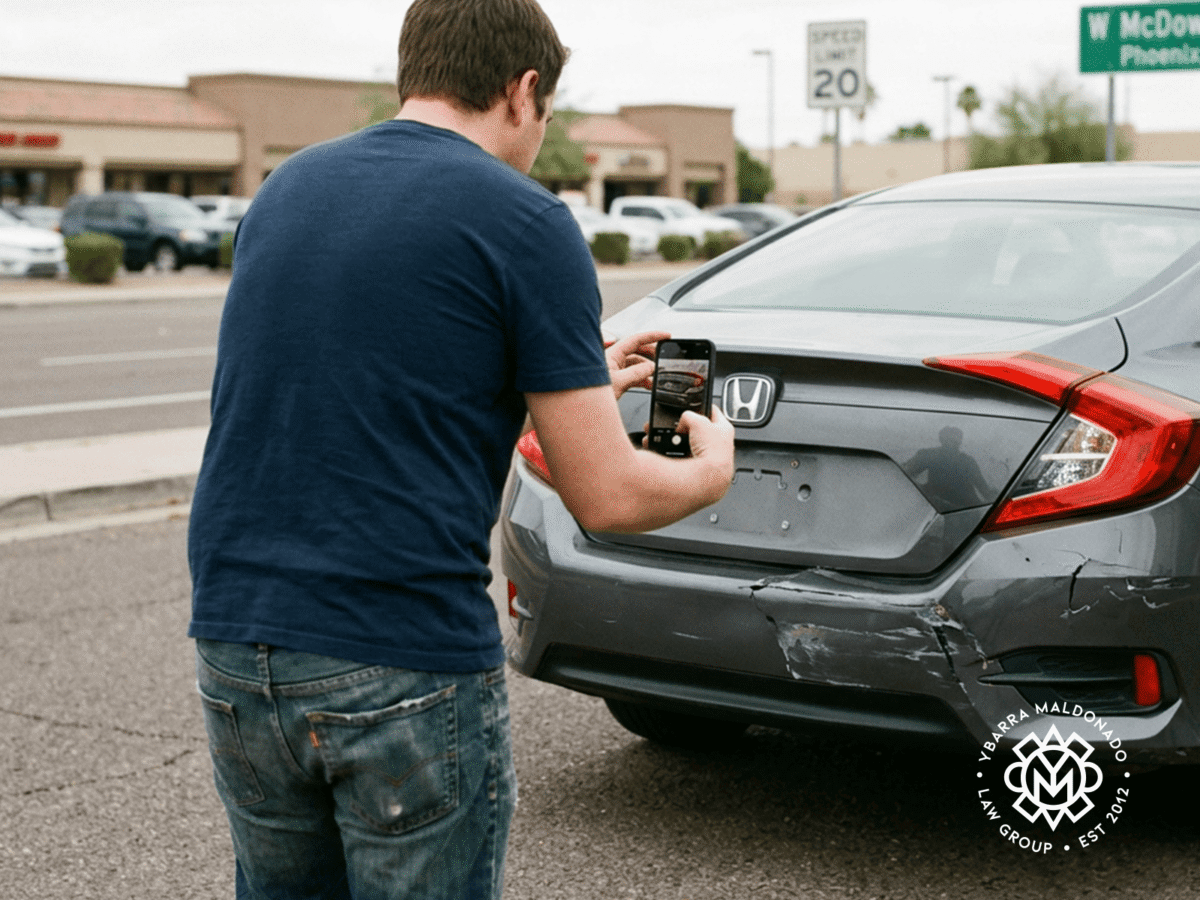
Who Is Actually Liable? Breaking Through the ‘Independent Contractor’ Wall – Uber Accident
Uber often avoids direct blame by classifying drivers as independent contractors instead of employees.
This limits Uber’s direct responsibility, but it may not block access to its commercial insurance after a rideshare crash.
If the driver was carrying a passenger or heading to pickup, Uber’s active-trip policy may provide primary coverage.
Crashes on busy roads like Camelback Road often involve more than the rideshare vehicle. When another driver causes the crash, that driver’s personal insurance usually pays first. In Phoenix, state-minimum coverage often does not cover all hospital bills. Uber’s underinsured motorist policy may help pay the difference.
Arizona law allows compensation even when multiple parties share fault. Under pure comparative negligence, you can still file a claim if you were partly at fault. Your payout is reduced by your share of fault. That makes rideshare fault disputes highly technical. A small change in fault percentage can change your settlement by thousands.
Identifying every liable party helps maximize your compensation. Once liability is clear, the next step is calculating your full losses. That helps ensure any settlement matches your long-term needs.
Calculating Your Recovery: What a Phoenix Uber Injury Claim is Truly Worth
Insurance adjusters often treat your life-altering crash as a simple math problem, adding up only the receipts they can see immediately. However, accurately calculating compensation for rideshare injuries in Arizona requires looking far beyond today’s emergency room invoice. You are entitled to recover two specific categories of value: “Special Damages,” which cover tangible costs like ambulance fees and lost wages, and “General Damages,” which compensate you for the human cost—including pain, emotional distress, and the inability to enjoy hobbies you once loved. A settlement offer that pays for your wrecked bumper but ignores the months of rehabilitation you face is fundamentally inadequate.
Proving these losses requires a detailed paper trail that connects the accident directly to your financial and physical hardships. Memories fade quickly after trauma, but thorough documentation creates a permanent record that forces insurance companies to take your claim seriously. To protect the potential value of your case, start compiling these five critical pieces of evidence immediately:
- Medical Bills: Keep every invoice, from the initial ambulance ride to ongoing physical therapy co-pays.
- Uber/Lyft Receipts: Save the digital trip receipt showing the time, route, and driver details.
- Missed Work Hours: Document all sick days, vacation time, or unpaid leave used for recovery.
- Prescription Logs: Track out-of-pocket costs for pain management medication and mobility aids.
- Daily Pain Journal: Write down specific ways injuries limit your daily activities, such as an inability to lift groceries or sleep through the night.
Time is a strict factor in these negotiations, and waiting too long can be fatal to your claim. The Phoenix personal injury statute of limitations generally gives you two years from the date of the accident to take legal action. While this might sound like a long time, building a robust case involving corporate insurance policies takes months of medical analysis. If the insurance company stalls until that window closes, you lose your right to recover anything. Filing a lawsuit against Uber in Maricopa County before this deadline often requires professional strategy to ensure no procedural errors derail your financial recovery.
Why ‘Going It Alone’ Costs More: How a Phoenix Lawyer Levels the Playing Field
Corporations like Uber employ massive defense teams dedicated to minimizing payouts, often pressuring unrepresented victims into accepting “lowball” settlements immediately after a crash. A qualified Phoenix Uber accident lawyer acts as your shield against these aggressive tactics, handling all communication so you avoid accidentally saying something that devalues your claim. By forcing insurers to play by the rules, an attorney ensures that your compensation reflects the true cost of your recovery rather than a quick, discount offer.
Many accident victims hesitate to seek help because they fear expensive hourly rates, but reputable firms operate differently. Through contingency fees for Arizona injury lawyers, you pay absolutely nothing upfront; your attorney only gets paid a percentage of the final settlement if they win your case. This model aligns your interests with theirs, motivating your legal team to maximize the payout for your injuries, lost wages, and suffering.
Beyond the settlement check, experienced counsel provides critical value by negotiating medical liens—legal claims that health providers place on your settlement money to recoup unpaid bills. A skilled Lyft accident attorney in Phoenix knows how to legally reduce these repayment demands, meaning more of the final award goes into your pocket rather than to a hospital billing department. With the financial framework secured, your focus must shift immediately to the practical steps required in the days following the crash.

Your 48-Hour Recovery Roadmap: Securing Your Future after an Uber Accident
You no longer need to feel paralyzed by the complexity of Arizona insurance laws or Uber’s corporate layers. Understanding the difference between a driver’s personal policy and commercial coverage turns a chaotic crash into a manageable path toward recovery. You now possess the clarity to spot the difference between a quick, low-ball offer and the true value of your case.
To protect your future immediately, follow this “48-Hour Roadmap”:
- See a doctor: Establish a medical record right away, even for minor aches.
- Download trip data: Screenshot your ride receipt and the driver’s profile within the app.
- Decline recorded statements: Do not speak to insurance adjusters without guidance.
- Call a Phoenix rideshare attorney: Bring in an expert before evidence disappears.
Navigating a claim against a tech giant doesn’t require upfront wealth; it requires a strategic partner. Whether you need an Arizona Uber accident attorney or a Phoenix Lyft accident lawyer, remember that initial consultations are risk-free. Reach out to a skilled Uber accident attorney Phoenix residents trust today, and let them handle the fight while you focus on healing.
Abogado Ray – Cafecito con Ray
Join us every Thursday at 11:00 AM for our YouTube Live. Subscribe and set your notifications at youtube.com/@AbogadoRay to stay informed and get your questions about immigration, criminal defense or personal injury answered in real-time.