


A person arrested by immigration authorities in the Phoenix area may initially be processed or temporarily held nearby and later transferred to an immigration detention facility elsewhere in Arizona, in some circumstances, outside the state.
For families, that uncertainty can make an already difficult situation even harder. Knowing how ICE detention centers in Arizona, temporary holding facilities, and transfers work can help you take the next steps more quickly.
At Ybarra Maldonado Law Group, we work with immigrant families throughout Phoenix and Arizona. We know that when someone you love is detained, your first priorities are often finding them, understanding what is happening, and making sure they have access to legal help.
Where Does ICE Take People Detained in Phoenix?
There is no single detention center where every person arrested by ICE in Phoenix is sent.
ICE operates through a broader detention network. A person’s location may depend on where the arrest occurred, available detention space, processing needs, the person’s immigration case, medical or security considerations, and later transfer decisions.
Phoenix-area families should understand the difference between a temporary holding location and a longer-term immigration detention facility.
Temporary ICE Holding in Mesa
One facility that has become particularly relevant to Phoenix-area detention is the Arizona Removal Operations Coordination Center (AROCC) at Phoenix-Mesa Gateway Airport.
Recent Arizona reporting describes AROCC as a temporary ICE holding facility where people may be held before being transferred to longer-term detention facilities or placed on removal flights.
That means a loved one could be taken to a facility in the Phoenix metropolitan area initially and then moved again.
For families, this is an important distinction: the first location you learn about may not be the person’s final detention location.
ICE Detention Facilities in Eloy and Florence
Arizona also has longer-term immigration detention facilities in Pinal County, south of the Phoenix area.
In 2026, current reporting and federal records continued to identify several facilities holding people in ICE custody, including:
- Eloy Detention Center
- Florence Service Processing Center
- Central Arizona Florence Correctional Center
In July 2026, for example, DHS and facility operators confirmed that ICE detainees were being held at all three facilities during a measles-related quarantine. ICE’s detention-facility directory also lists the Central Arizona Florence Correctional Center under its Phoenix Field Office.
These facilities are outside Phoenix, so a person detained in Maricopa County may end up being housed some distance from their family.
Families should not assume, however, that someone has been taken to Eloy or Florence simply because those facilities are commonly used. Always confirm the person’s current location before traveling to a detention center or attempting a visit.
A New ICE Detention Facility Is Planned in Marana
Arizona’s detention landscape is also changing.
On September 29, 2026, Management & Training Corporation signed a contract with ICE to operate an immigration detention facility in Marana, Arizona, north of Tucson. The company said the facility would have approximately 775 beds and anticipated beginning operations within about two months.
Because this is a developing situation, families should not assume a person is being housed in Marana unless their location has been confirmed through ICE or another reliable source.
The development does show why families need current information. Immigration detention capacity, facilities, and transfer patterns can change.
Why Does ICE Transfer People Between Detention Centers?
Being placed in one detention center does not necessarily mean someone will remain there throughout their immigration case.
ICE has procedures allowing detainees to be transferred between facilities. Its detention standards identify circumstances including medical needs, changes affecting the location of immigration proceedings, and security considerations among examples that can lead to transfers.
From a family’s perspective, a transfer can happen suddenly.
Someone who was in Mesa may later appear in Eloy. Someone in Florence may later be moved elsewhere. In some cases, a person can also be transferred outside Arizona.
ICE’s transfer standards indicate that detainees may not receive advance details about an upcoming transfer. The standards also place responsibility for notifying family members on the detained person or their attorney.
That can create periods when a family does not immediately know where their loved one is.
A temporary loss of contact does not automatically mean the person has been deported or released. A transfer may be taking place.
How Can I Find Someone Detained by ICE in Arizona?
One of the first tools families can use is ICE’s Online Detainee Locator System.
The system currently allows searches for people who are in ICE custody as well as certain people who have been in U.S. Customs and Border Protection custody for more than 48 hours. It does not provide searches for people under 18.
There are two primary ways to search.
Search Using the A-Number
If you have the person’s A-Number, this is generally the best place to start.
An A-Number is an immigration identification number associated with a person’s immigration records. ICE’s locator requires the number to contain nine digits. If the number is shorter, zeros may need to be added at the beginning.
You will also need the person’s country of birth.
Families should save a loved one’s A-Number somewhere secure whenever possible. It can become especially valuable during detention.
Search Using the Person’s Name
If you do not know the A-Number, ICE also allows searches using biographical information.
Be careful with spelling.
ICE states that first and last names must match its records exactly. A missing hyphen, different spelling, or variation of a person’s name may prevent the record from appearing.
For immigrant families whose legal documents use different combinations of maternal and paternal surnames, this can be particularly frustrating. Try to use the person’s name exactly as it appears on their immigration documents.
What If the ICE Detainee Locator Does Not Show the Person?
Do not immediately assume the worst.
There are several possible reasons someone may not appear when you first search.
They may still be going through initial processing. Their information may not yet be available in the system. They could be in custody that is not yet reflected by the locator, or the spelling or identifying information entered may not exactly match ICE’s records.
The current locator also explains that people who have been in CBP custody for fewer than 48 hours may not appear.
Try searching with the A-Number if you have it. Double-check the person’s legal name and country of birth.
ICE also provides a Detention Reporting and Information Line at 1-888-351-4024, with language assistance available, including Spanish.
If you still cannot locate someone, speaking with an immigration attorney can help determine what additional steps may be available.
What Information Should Families Gather After an ICE Detention?
If someone you love has been detained, start gathering information while events are still fresh.
Useful information may include the person’s full legal name, date and country of birth, A-Number if available, copies of immigration documents, information about where and when the detention occurred, medications or important medical conditions, upcoming immigration court dates, criminal court information if applicable, and the name of any attorney already representing them.
Also keep track of every detention location you learn about.
Someone’s location may change, and having a simple timeline can help the family and attorney understand what has happened.
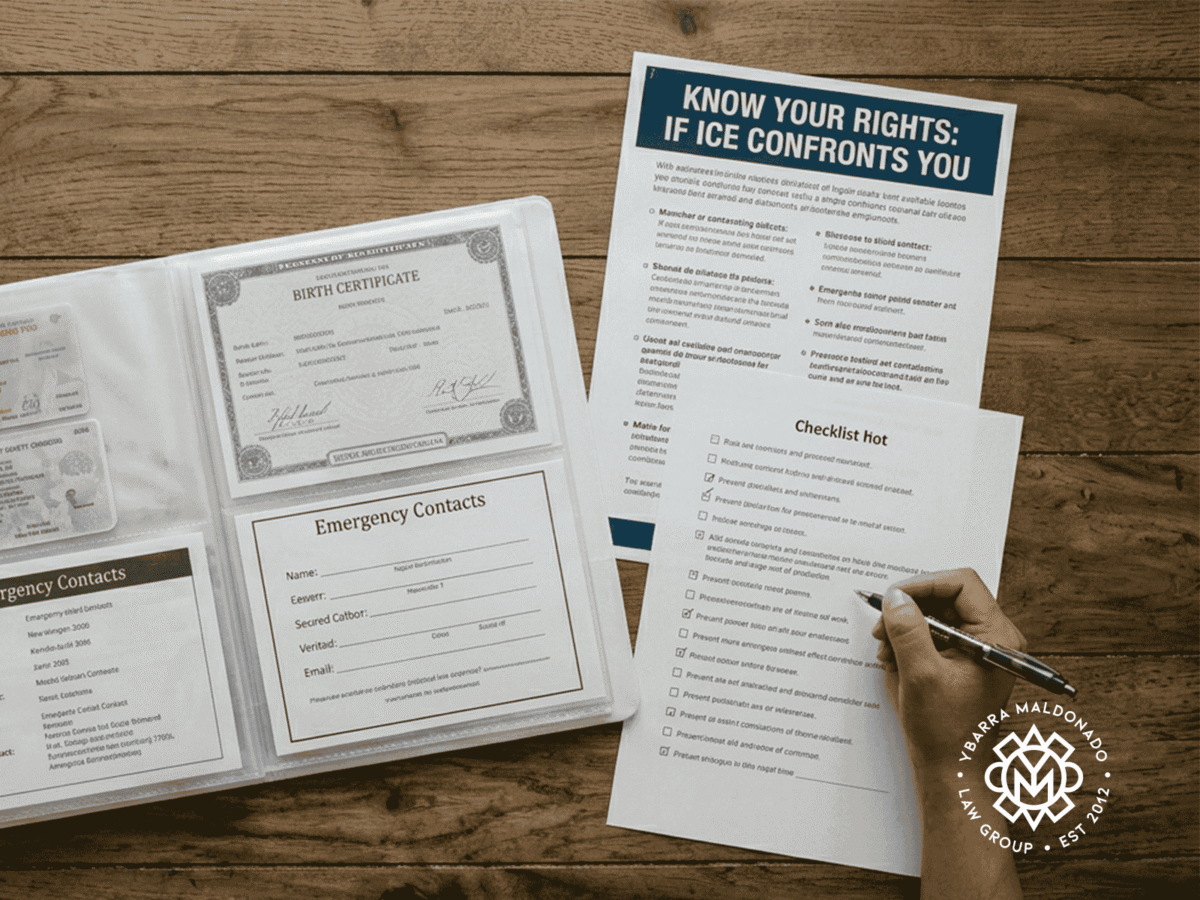
If your family is concerned about the possibility of detention before it happens, check out our Detention Preparation Safety Plan.
Can Someone Detained in Phoenix Be Transferred Out of Arizona?
Yes. Families should be prepared for the possibility that ICE may transfer someone beyond Arizona.
ICE operates a national detention network, and transfers between facilities are part of the detention system.
A transfer can create practical problems for families. Visiting may become harder. Phone communication can be interrupted. A person’s attorney may suddenly be located hundreds of miles away from the client.
That is one reason early legal involvement can matter.
An attorney who has formally entered the immigration case may be able to track the person’s custody location, evaluate what the transfer means for the case, and determine whether there are legal options related to detention or release.
Does Being Transferred Mean Someone Is Being Deported?
Not necessarily.
A detention transfer and deportation are not the same thing.
Someone can be moved from one ICE facility to another while their immigration proceedings are still ongoing.
ICE’s own transfer standards instruct that, when a detainee is transferred within the United States, they should be informed that they are being moved to another facility rather than being removed from the country.
Still, every person’s immigration situation is different. A person’s legal status, immigration history, prior orders, criminal history, pending applications, and procedural posture can all affect what happens next.
If a loved one has been detained, do not rely on assumptions about what detention or a transfer means for their individual case.
Detention Can Affect an Entire Family
When a parent, spouse, sibling, or other loved one is suddenly detained, the consequences reach far beyond the detention center.
Families may immediately be trying to answer questions about children, rent, work, medications, vehicles, court dates, and finances—while simultaneously trying to find someone inside a system they may never have dealt with before.
For immigrant families in Phoenix, language can create another barrier. So can fear about contacting government agencies or uncertainty about whether other family members could be at risk.
At Ybarra Maldonado Law Group, we believe families deserve clear information and a place where their concerns are taken seriously.
Our immigration practice includes helping families understand immigration proceedings and the legal issues that can arise when someone is detained.
Frequently Asked Questions About ICE Detention in Arizona
Where are ICE detainees from Phoenix usually taken?
There is no single destination. A person may initially pass through a temporary Phoenix-area holding location such as the facility in Mesa and later be transferred. Current Arizona detention facilities include locations in Eloy and Florence, but an individual could also be transferred elsewhere.
How quickly will someone appear in the ICE detainee locator?
There can be a delay between detention and when information becomes available. ICE’s current locator includes people in ICE custody and certain people held by CBP for more than 48 hours. If the person does not appear immediately, continue checking and verify that the identifying information is correct.
Can ICE move someone without telling the family first?
Transfers may occur without the family receiving advance notice. ICE’s transfer standards place responsibility for family notification on the detainee or attorney, and detainees themselves may not receive detailed advance notice of a transfer.
Can someone detained in Arizona be sent to another state?
Yes. ICE operates detention facilities across the country, and detainees can be transferred between facilities. The location of detention can therefore change during an immigration case.
What should I do if my loved one suddenly disappears from a detention facility?
Check the ICE Online Detainee Locator again and contact the person’s attorney if they have one. A change in location can indicate a transfer. Do not assume that the person has been deported simply because communication stopped temporarily.
Your Family Does Not Have to Figure This Out Alone
When someone you love is detained, every hour can feel important. Families want to know where their loved one is, whether they are safe, what is happening with their immigration case, and what can be done next.
Start by gathering the person’s immigration information, especially their A-Number. Check the ICE detainee locator, document any facility changes, and get legal guidance as soon as possible if you have questions about the person’s case.
At Ybarra Maldonado Law Group, we serve immigrant families in Phoenix and throughout Arizona with experience, strength, and respect for what families are facing.
If someone you love has been detained by ICE or transferred to an immigration detention facility, contact Ybarra Maldonado Law Group to discuss the situation and learn what legal options may be available.
Legal Disclaimer: This article is provided for general informational purposes only and does not constitute legal advice. Immigration detention procedures, facility assignments, transfer practices, and individual legal options can change and depend on the facts of each case. Reading this article does not create an attorney-client relationship.