
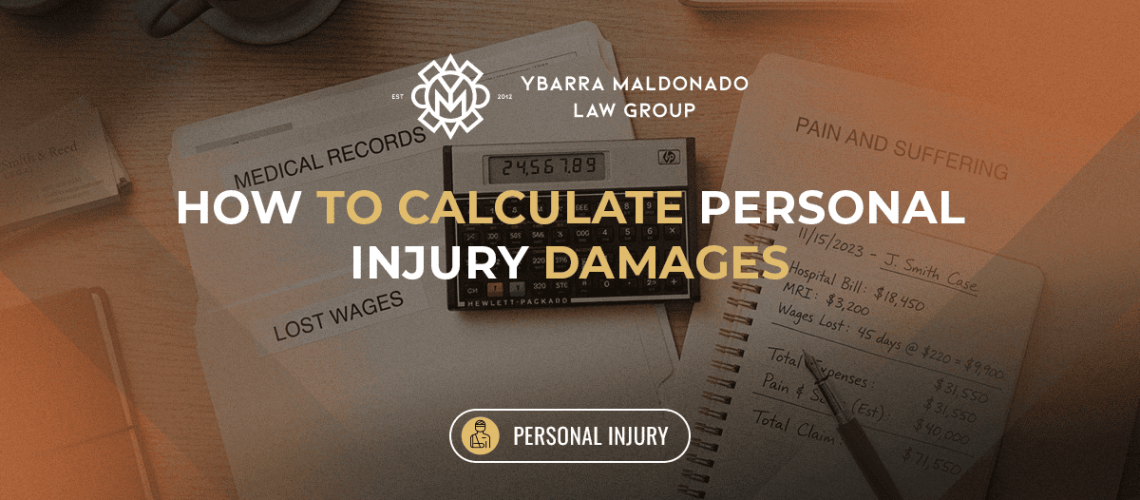

Calculating personal injury damages can be complex. It involves understanding various types of damages and how they apply to your case.
Personal injury damages are monetary awards given to victims in personal injury cases. They aim to compensate for losses and suffering.
There are different types of damages in personal injury cases, including economic, non-economic, and punitive damages. Each type serves a unique purpose.
Understanding how damages are calculated in personal injury cases is crucial. This guide will explore the methods used to calculate damages and the factors influencing these calculations.
At Ybarra Maldonado Law Group, we help injury victims understand how damages are calculated and what truly drives the value of a case. Our team is committed to guiding you through every step, from documenting losses to negotiating fair compensation. Contact us today +1-602-910-4040
What Are Personal Injury Damages?
Personal injury damages refer to financial compensation awarded to a victim in a personal injury case. They aim to alleviate the impact of injuries suffered.
Damages in personal injury cases are generally categorized into different types. These categories reflect the various effects that injuries can impose on a victim’s life. Understanding these categories is essential for evaluating a personal injury claim.
Here are the main categories:
- Compensatory Damages: To cover actual losses.
- Economic Damages: To address quantifiable losses.
- Non-Economic Damages: For intangible impacts.
- Punitive Damages: To punish the defendant’s behavior.
Each type plays a significant role in restoring the victim to their pre-injury state.

Types of Damages in Personal Injury Cases
In personal injury cases, damages aim to compensate the victim. These damages are divided into multiple categories to address the diverse impacts of an injury. Each type of damage serves a unique purpose in the compensation process.
The main types of damages include:
- Economic Damages: Cover financial losses such as medical costs.
- Non-Economic Damages: Compensate for emotional and psychological impacts.
- Punitive Damages: Intended to punish the defendant for severe misconduct.
Understanding these types helps both victims and legal professionals develop a strong claims strategy. Each type addresses specific aspects of the harm suffered.
A clear comprehension of these damages is vital for anyone involved in a personal injury case. It ensures fair compensation and justice.
Economic Damages (Special Damages)
Economic damages, also known as special damages, cover tangible losses. These are quantifiable expenses that the victim has incurred. Accurately calculating these damages is crucial for fair compensation.
Common examples of economic damages include:
- Medical Bills: Expenses for treatments, surgeries, and rehabilitation.
- Lost Wages: Income lost due to inability to work.
- Property Damage: Costs for repairing or replacing damaged items.
These damages are easier to calculate since they come with clear financial records. Documenting all expenses is essential to support these claims.
Victims should maintain records of all financial losses to ensure they receive adequate compensation. This includes both past and future anticipated costs.
Non-Economic Damages (General Damages)
Non-economic damages, or general damages, address intangible losses. Unlike economic damages, these are subjective and harder to quantify. They reflect the emotional and psychological toll of the injury.
Examples of non-economic damages include:
- Pain and Suffering: Physical discomfort and mental anguish.
- Emotional Distress: Anxiety, depression, and trauma effects.
- Loss of Enjoyment of Life: Inability to partake in hobbies.
These damages hinge on the victim’s personal experience and impact on their life. Proving such damages often requires personal testimonies and expert insights.
Calculating non-economic damages is complex due to their subjective nature. Victims should articulate their emotional suffering to strengthen their claims.
Punitive Damages
Punitive damages serve a distinct purpose. They are designed to punish the defendant for egregious behavior. Unlike compensatory damages, they do not aim to cover losses directly.
Punitive damages are awarded in specific scenarios, including:
- Gross Negligence: Reckless disregard for the victim’s safety.
- Intentional Harm: Deliberate actions causing injury.
These damages also deter others from similar conduct. Courts consider the defendant’s behavior severity when awarding punitive damages. Not all cases qualify, as they require a clear demonstration of the defendant’s malicious intent or gross negligence.

How Are Damages Calculated in Personal Injury Cases in Phoenix?
Calculating damages in personal injury cases involves assessing various factors. The victim’s losses and suffering must be thoroughly examined. This ensures that fair compensation reflects the full impact of the injury.
A damages calculation typically includes:
- Assessing financial documentation to determine economic losses.
- Evaluating personal testimonies and expert insights for non-economic damages.
- Considering any punitive damages based on defendant’s conduct.
Each element plays a crucial role in the overall calculation. The calculation is not just about numbers; it reflects the case’s complexities.
Calculating Economic Damages – Personal Injury in Phoenix
Economic damages require a detailed examination of financial losses. This involves gathering and analyzing relevant monetary evidence. Documented costs help claimants prove the financial burden caused by the injury.
Examples of evidence used include:
- Medical Receipts: Detailed records of all healthcare-related expenses.
- Pay Stubs and Income Statements: Indicating lost earnings due to inability to work.
- Repair Invoices: Costs associated with damaged property restoration.
Such evidence substantiates the economic impacts, ensuring fair compensation. Accurate data collection and presentation are crucial.
Victims should prioritize meticulous record-keeping to strengthen their claims. This aids in painting a comprehensive picture of the economic loss suffered.
Calculating Non-Economic Damages
Non-economic damages require different methods for estimation. They aim to compensate for subjective impacts like pain and emotional distress. These damages involve assessing personal experiences and future implications.
Factors considered include:
- Degree of Pain: Severity and duration of physical suffering.
- Emotional Well-being: Impact on mental health and quality of life.
- Lifestyle Adjustments: Changes in daily activities and hobbies.
These factors help gauge the intangible impacts of an injury. Highlighting the personal toll enhances the validity of claims.
Addressing non-economic damages involves articulating personal hardships. This requires a clear narrative supported by evidence. The Multiplier Method
The Multiplier Method – Personal Injury Attorney
is one approach used to calculate non-economic damages. It involves multiplying total economic damages by a number. This number typically ranges from 1.5 to 5.
The multiplier reflects injury severity and its impact on daily life. A higher multiplier indicates more severe effects and justifies larger compensation. It is crucial in quantifying intangible suffering. The Per Diem Method
The per diem method provides another way to calculate non-economic damages. This approach assigns a daily monetary value to the victim’s suffering. The daily rate is multiplied by the days the victim has suffered.
It offers a straightforward calculation by focusing on daily hardships. This method highlights continuous suffering over time. The approach enables a clear understanding of ongoing damages.

Calculating Punitive Damages
Punitive damages calculations consider the defendant’s behavior. The court assesses the intent and nature of wrongdoing. These damages are not directly tied to the victim’s losses.
Factors influencing calculation include:
- Defendant’s Intent: Whether there was malice or gross negligence.
- Deterrence Need: Necessity to prevent similar future actions.
The severity of the misconduct guides the punitive damages amount. It underscores the importance of accountability in extreme cases.
Factors That Influence Personal Injury Damages
Many factors can affect the amount awarded in personal injury cases. Each element can significantly influence the outcome. Understanding these factors helps prepare for a more comprehensive damages claim.
Key influences include:
- Injury Severity: More severe injuries often lead to higher compensation.
- Victim’s Age and Health: Younger or healthier victims might face prolonged suffering.
- Lifestyle and Occupation: Impact on daily activities and job performance.
The interaction of these elements determines the claim’s value. Personal circumstances play a large role in calculating damages.
The legal context, such as state laws and caps, can also impact settlements. Being informed about these variables aids in navigating complex claims.
Evidence and Documentation for a Damages Claim
Strong evidence is essential for validating a damages claim. Well-organized documentation supports your case and strengthens your argument. Collecting proof early can make a significant difference.
Key documents include:
- Medical Records: Show the extent of injuries and treatment received.
- Financial Documents: Prove lost wages and other expenses.
- Expert Testimonies: Provide insights into future costs and impacts.
Gather these elements to build a persuasive claim. A comprehensive collection ensures a smoother legal process.
Legal Limits and State Laws Affecting Damages
State laws can significantly influence personal injury damages. Each state has unique regulations governing compensation limits. Familiarizing yourself with these laws is crucial.
Important considerations include:
- Caps on Non-Economic Damages: Some states impose limits.
- Statute of Limitations: Varies by state and injury type.
- Comparative Negligence Rules: Reduce damages if the plaintiff is partly at fault.
Understanding these legal constraints is essential. They impact how much you might recover in your case. At Ybarra Maldonado Law Group, our focus is simple: maximize the value of your personal injury claim in Phoenix. We combine legal strategy with a deep understanding of damages to pursue the compensation you deserve.
The Role of Insurance and Settlements
Insurance companies often play a pivotal role in personal injury cases. They assess claims and decide on payouts. Navigating this process can be complex.
Key points about insurance and settlements include:
- Policy Limits: Restrict the total compensation.
- Negotiation: Insurers may offer lower initial settlements.
- Alignment: Insurers’ interests may not match with the victim’s.
Understanding these elements helps in managing expectations and strategizing effectively.
Why Legal Representation Matters – Personal Injury Phoenix
Legal representation is crucial in personal injury cases. An attorney provides expertise, which helps navigate complex legal challenges.
Benefits of having legal representation include:
- Case Evaluation: Lawyers assess case strength.
- Evidence Gathering: Attorneys compile crucial documentation.
- Settlement Negotiation: Lawyers aim for fair compensation.
These services ensure that the victim’s rights are protected throughout the process.
Personal Injury Damages Claims in Phoenix
Understanding personal injury damages is essential for victims seeking fair compensation. Knowledge of how damages are calculated empowers them to make informed decisions.
An injury can affect every part of your life. At Ybarra Maldonado Law Group, we take the time to understand your story and fight for compensation that reflects both your financial losses and personal suffering.
Key takeaways include recognizing the types of damages and the importance of evidence. Legal guidance can maximize compensation and streamline navigating the complexities of injury claims.
Q&A
What are the main types of personal injury damages and what do they cover?
Economic, non-economic, and punitive damages. Economic damages (special damages) compensate for quantifiable financial losses like medical bills, lost wages, and property damage. Non-economic damages (general damages) address intangible harms such as pain and suffering, emotional distress, and loss of enjoyment of life. Punitive damages don’t compensate losses.
How do I calculate and prove economic (special) damages?
Economic damages are calculated by totaling documented, out-of-pocket losses. Collect and organize evidence such as medical receipts and bills (treatments, surgeries, rehab), pay stubs and income statements (to show lost wages), and repair or replacement invoices (for property damage). Accurate, comprehensive record-keeping—covering both past costs and reasonably anticipated future expenses—is essential to substantiate the full financial impact.
How are non-economic damages estimated, and what methods are used?
Non-economic damages are subjective and focus on the injury’s personal toll. They’re supported by personal testimony and expert insights and evaluated using factors like the degree and duration of pain, effects on mental health and quality of life, and lifestyle changes or activity limitations. Two common estimation approaches are:
- Multiplier method: Multiply total economic damages by a number (typically 1.5 to 5) reflecting severity and day-to-day impact.
- Per diem method: Assign a daily dollar value to suffering and multiply by the number of days the victim experiences it. A clear narrative of hardships, backed by evidence, strengthens these claims.
When do punitive damages come into play, and how are they determined?
Punitive damages apply in limited circumstances to punish and deter egregious misconduct, such as gross negligence or intentional harm. They’re not tied to the victim’s actual financial losses. Courts focus on the defendant’s intent and the severity of the wrongdoing, as well as the need for deterrence, when deciding whether to award them and in what amount.
What factors, laws, and insurance issues can change how much I recover?
Several elements influence outcomes:
- Case-specific factors: Injury severity, the victim’s age and health, and the impact on lifestyle and occupation often drive award size.
- State laws: Caps on non-economic damages, statutes of limitations, and comparative negligence rules (which reduce recovery if the plaintiff shares fault) can limit or adjust compensation.
- Insurance dynamics: Policy limits cap available funds; initial offers may be low and require negotiation; insurer interests may not align with the victim’s. Understanding these variables helps set expectations and strategy. Legal representation can assist with case evaluation, evidence gathering, and negotiating fair settlements.