

After an accident, some of the most useful evidence may exist for only a short time. Vehicles get repaired. Bruises heal. Road conditions change. Witnesses leave. Security footage may eventually be overwritten.
That is why gathering evidence for a personal injury claim in Arizona should begin as early as it safely can.
Your health comes first. If you need emergency care, getting medical attention is more important than taking photographs or collecting paperwork. But once you are safe, preserving information about what happened can make it easier to understand the accident later and document the injuries, expenses, and changes it caused in your life.
At Ybarra Maldonado Law Group, we know that dealing with an accident can feel especially overwhelming when you are also supporting a family, missing work, communicating in a second language, or trying to understand an unfamiliar insurance system. You do not need to build a perfect case file on your own. Starting with the information you already have can make a meaningful difference.
What Evidence Should You Save After an Accident?
A useful accident file should help answer three basic questions: What happened? Who was involved? What did the accident cause?
Depending on the type of accident, consider preserving:
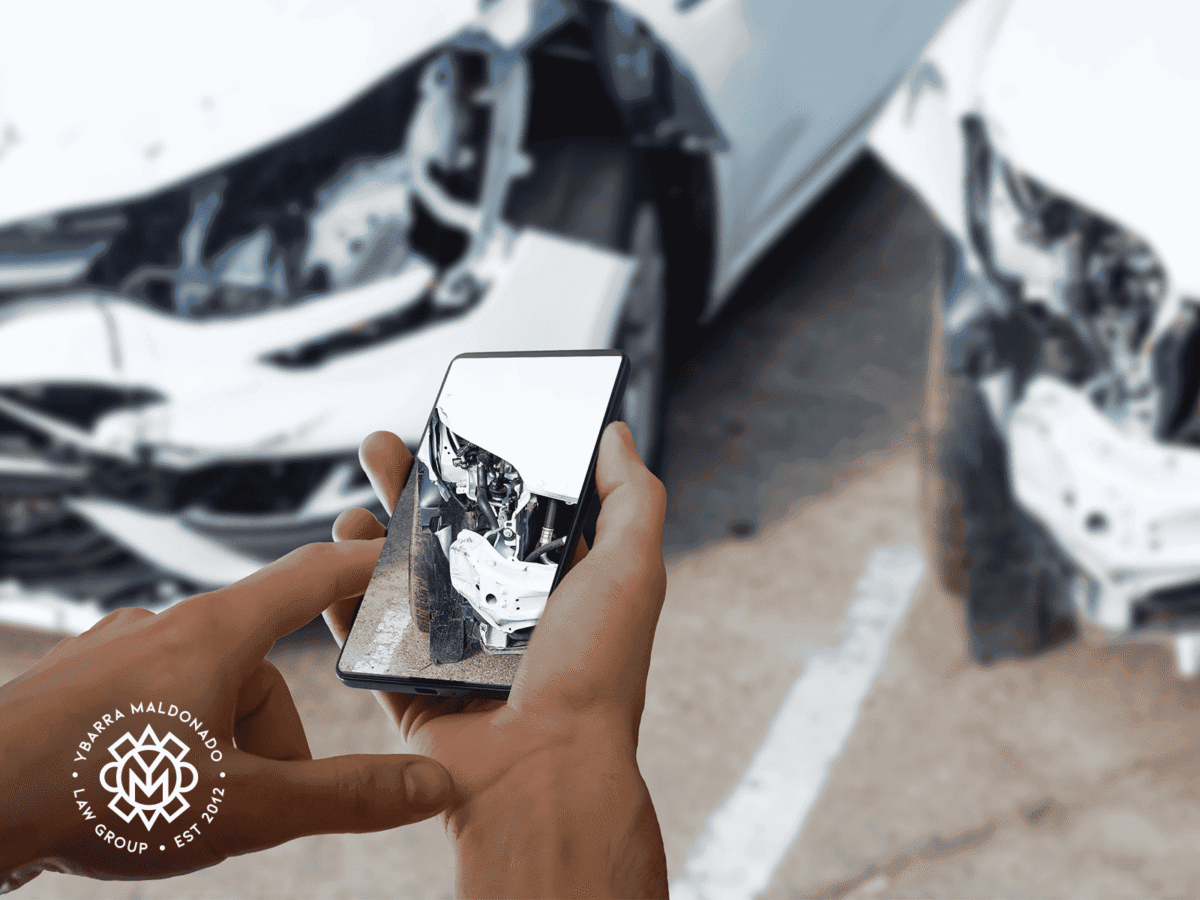
- Photos and videos from the scene. Save images showing vehicle damage, the overall accident location, traffic signs or signals, lane markings, debris, skid marks, weather or lighting conditions, visible hazards, and injuries. When possible, keep the original digital files rather than only screenshots or edited versions.
- Information about the people involved. Keep names, telephone numbers, insurance information, license-plate information, and any other identifying details exchanged after the accident. Save the contact information of witnesses separately so it does not disappear inside a long text-message thread.
- Police reports and incident information. Save the report or incident number, responding agency, officer information you received, and copies of any reports you later obtain. Phoenix Police currently allows public-record requests for traffic-crash records as well as categories such as photographs, body-camera audio/video, 911 recordings, and certain surveillance videos.
- Medical records and treatment information. Keep discharge papers, appointment summaries, referrals, prescriptions, medical bills, physical-therapy records, imaging information, and instructions from your providers. It can also help to maintain a simple list of the providers you saw and the dates of treatment.
- Proof of lost income or work changes. Save pay stubs, schedules, employer communications, time-off records, doctor’s work restrictions, and documents showing missed shifts or reduced hours. If your injuries prevent you from doing particular parts of your job, keep records showing those changes.
- Receipts and accident-related expenses. Save bills for prescriptions, medical equipment, towing, vehicle storage, rental transportation, rides to medical appointments, repairs, and other costs connected to the accident. Small expenses can be easy to forget when they happen over several weeks or months.
- Vehicle and damaged-property records. Keep repair estimates, photographs, towing documents, total-loss communications, and photographs of damaged personal property. Before disposing of a seriously damaged item that may be relevant to what happened, consider speaking with an attorney about whether it should be preserved.
- Insurance communications. Keep emails, letters, claim numbers, adjuster contact information, requests for documents, settlement communications, and copies of anything you submit. A dedicated email folder can make this much easier.
- A timeline of what happened afterward. Write down important dates: the accident, emergency treatment, follow-up appointments, days missed from work, major changes in symptoms, and significant communications with insurance companies. Stick to what you remember and know rather than guessing about details you are unsure of.
Why Accident Evidence Matters in Arizona
Evidence is not just about proving that an accident happened. It can help establish how it happened and how it affected you afterward.
That can be particularly important when people disagree about responsibility.
Arizona law uses comparative negligence principles. In general, when an injured claimant is found partly responsible for causing an injury, damages can be reduced according to that person’s proportion of fault.
That makes photographs, video, witness information, vehicle damage, road conditions, and other evidence particularly useful when different versions of an accident emerge later.
It is also one reason this article has a different purpose from our guide explaining how a personal injury claim moves forward. Before a claim can be evaluated, someone first needs to understand and preserve the facts.
Some Evidence Can Disappear Quickly
Medical bills will usually remain available later. A security-camera recording may not.
Evidence worth identifying early can include nearby business cameras, residential doorbell cameras, dashcams, traffic-related recordings, photographs of a dangerous condition, vehicle data, damaged products, and witnesses who saw what happened.
You may not personally have access to every recording or record. That is okay.
Write down where you saw cameras, which businesses were nearby, and who may control the information. An attorney can evaluate whether additional steps are appropriate to try to preserve evidence held by another person, company, or government agency.
The same principle applies to vehicles and other physical objects. Repairs may be necessary, but photographs and documentation taken before major repairs can preserve information about the condition of the property immediately after the accident.
Keep the Original Files Whenever Possible
One simple rule can prevent unnecessary confusion later:
Preserve the original and work from copies.
Do not crop the only copy of an accident photograph, overwrite the original video, or delete an email because you saved a screenshot.
Instead, keep the original file and make a backup.
For photographs and video, that may mean keeping the files on your phone while also backing them up to secure cloud storage or another device. For paperwork, create digital copies while keeping important originals together.
This is not about creating a massive legal archive. It is about keeping a reliable record of what actually happened.
Create One Accident Folder Instead of Saving Everything Everywhere
Evidence becomes much easier to use when you can find it.
Consider creating one main folder for the accident and organizing it into sections such as:
Scene and Photos → Medical → Work → Expenses → Insurance → Vehicle or Property → Police/Official Records → Witnesses
You can also create one simple timeline listing important dates and where the supporting document is stored.
For example:
May 4 — Accident
Photos saved in “Scene.”
May 4 — Emergency room visit
Discharge documents saved in “Medical.”
May 6–10 — Missed work
Employer email and schedule saved in “Work.”
A system like this is often more useful than hundreds of unorganized screenshots.
Common Evidence Mistakes After an Arizona Accident
People are rarely thinking like investigators immediately after an accident. That is completely understandable. Still, a few habits can make documentation harder later.
Avoid throwing away receipts because the amount seems small. Do not rely entirely on the insurance company’s copy of your documents. Keep your own records.
Try not to dispose of damaged property before its condition has been documented. Preserve original photographs and videos rather than keeping only edited copies.
It is also wise to be thoughtful about social-media posts concerning the accident, your injuries, or your activities while a claim is unresolved. A public post creates another record that may later be viewed without the full context in which it was created.
Most importantly, do not decide that evidence is useless simply because you did not collect everything at the scene. Missing photographs do not mean there is nothing left to document.
What If You Did Not Gather Evidence at the Scene?
Start with what still exists.
Photograph your vehicle or damaged property. Save pictures of visible injuries as they develop or heal. Write down what you remember without adding details you are uncertain about. Locate insurance information and the police-report number if one exists.
Then collect your medical documents, receipts, employer records, and communications.
If a Phoenix-area crash was investigated by Phoenix Police, traffic-crash reports can be requested through the department’s public-records process.
An attorney may also be able to identify additional sources of evidence depending on where and how the accident occurred.
Do Not Let Evidence Collection Distract You From Arizona Deadlines
Saving documents is important, but preserving paperwork does not extend a legal deadline.
Arizona law generally provides a two-year limitations period for actions involving personal injury, although the correct deadline depends on the facts and type of claim.
Some claims can have much shorter requirements.
For example, claims against an Arizona public entity or public employee are subject to special rules. Arizona law generally requires a notice of claim within 180 days after the claim accrues, and actions against public entities or employees generally must be brought within one year.
That distinction can matter when an accident involves something like a government vehicle, public employee, public agency, or potentially a government-controlled property or roadway.
Because exceptions and special circumstances can change which deadline applies, do not use a general online deadline as a substitute for advice about your specific accident.
For Immigrant and Spanish-Speaking Families: Save What You Have
You do not need to decide by yourself whether every document is legally significant.
Keep records even if they are in Spanish. Save text messages, receipts, photographs, medical instructions, work schedules, and insurance letters rather than discarding them because you are unsure what matters.
At Ybarra Maldonado Law Group, our work with Arizona communities includes both immigration and personal injury matters. We understand that immigrant families may have questions and concerns extending beyond an insurance claim itself.
An accident should not leave your family feeling that you have to understand every part of the legal system before you can ask for help.
When Should You Talk With a Personal Injury Attorney?
Consider getting legal guidance early when your injuries are significant, responsibility for the accident is disputed, an insurance company is asking for statements or releases you do not understand, important video or physical evidence may disappear, you have missed substantial work, multiple people or companies may share responsibility, or a government entity may be involved.
An attorney can help identify what evidence already exists, what may still need to be preserved, and how that information fits into the larger claim.
You can also learn more about our personal injury representation in Phoenix.

Frequently Asked Questions About Personal Injury Evidence in Arizona
What if I did not take pictures immediately after the accident?
You may still have useful evidence. Photograph remaining vehicle or property damage, visible injuries, and—when appropriate and safe—the accident location. Preserve police information, witness contacts, medical records, insurance communications, and other documents that still exist.
Do I need a police report to make a personal injury claim?
A police or accident report can provide useful official information about an incident, but it is only one potential source of evidence. Photographs, witnesses, medical documentation, video, property damage, and other records can also be relevant.
Should I keep receipts for small accident-related expenses?
Yes. Rather than trying to decide immediately which expenses will eventually matter, keep receipts and records related to the accident and let your attorney evaluate them later.
How long should I keep accident evidence?
Do not discard potentially relevant evidence while a claim or legal matter remains unresolved. Because different claims and records can involve different deadlines, ask your attorney before destroying or deleting materials related to the accident.
What should I bring to a personal injury consultation?
Bring whatever you already have. Useful materials may include photographs, report numbers, medical documents, insurance information, correspondence, bills, pay records, witness information, and a short timeline. You do not need to delay speaking with an attorney because your file is incomplete.
Protect the Story the Evidence Can Tell
After an accident, evidence can help turn a confusing series of events into a clear record: what happened, who was involved, what injuries followed, what treatment was needed, and how the accident affected your work and family.
You do not need to collect everything in a single day. Start by preserving what you have and avoiding the loss of evidence that may be difficult to replace.
At Ybarra Maldonado Law Group, we work with injured people and families in Phoenix and throughout Arizona to understand what happened and what legal options may be available. If you have questions about an accident or the evidence you should preserve, you can contact our team and tell us what happened.
This article provides general educational information and is not legal advice. Personal injury deadlines, evidence requirements, and legal options depend on the specific facts of each case. Reading this article does not create an attorney-client relationship.